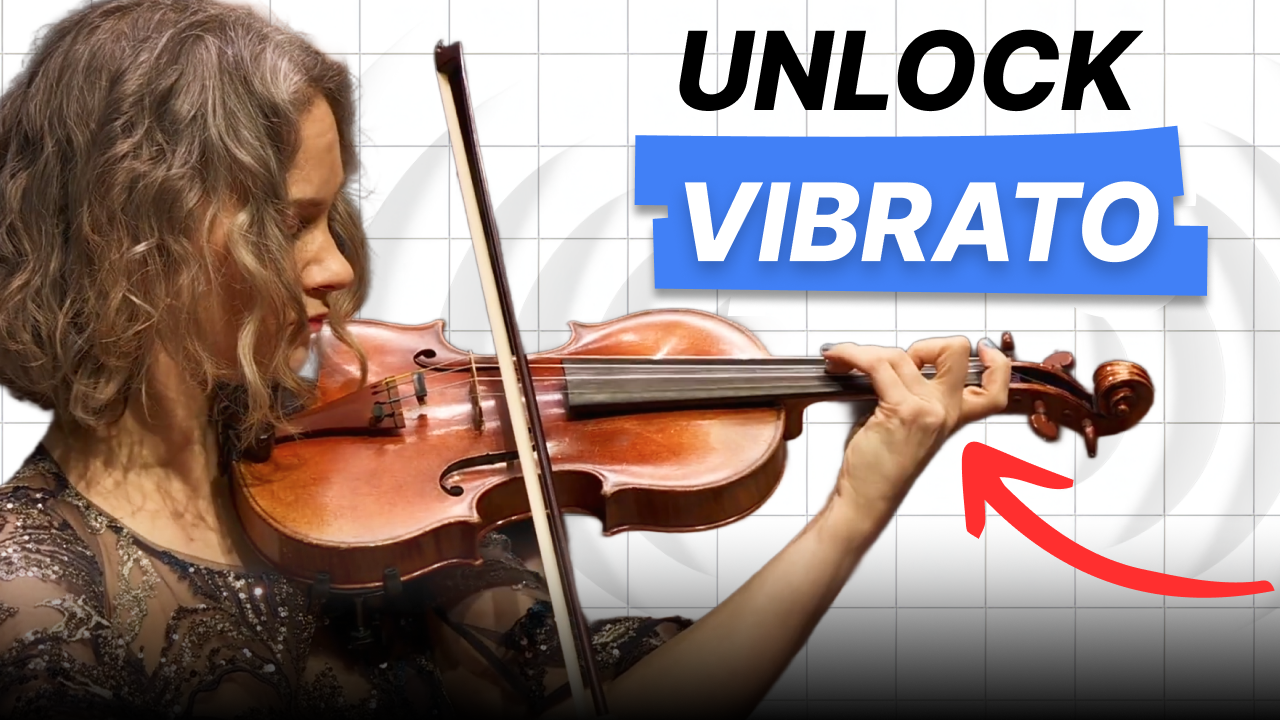
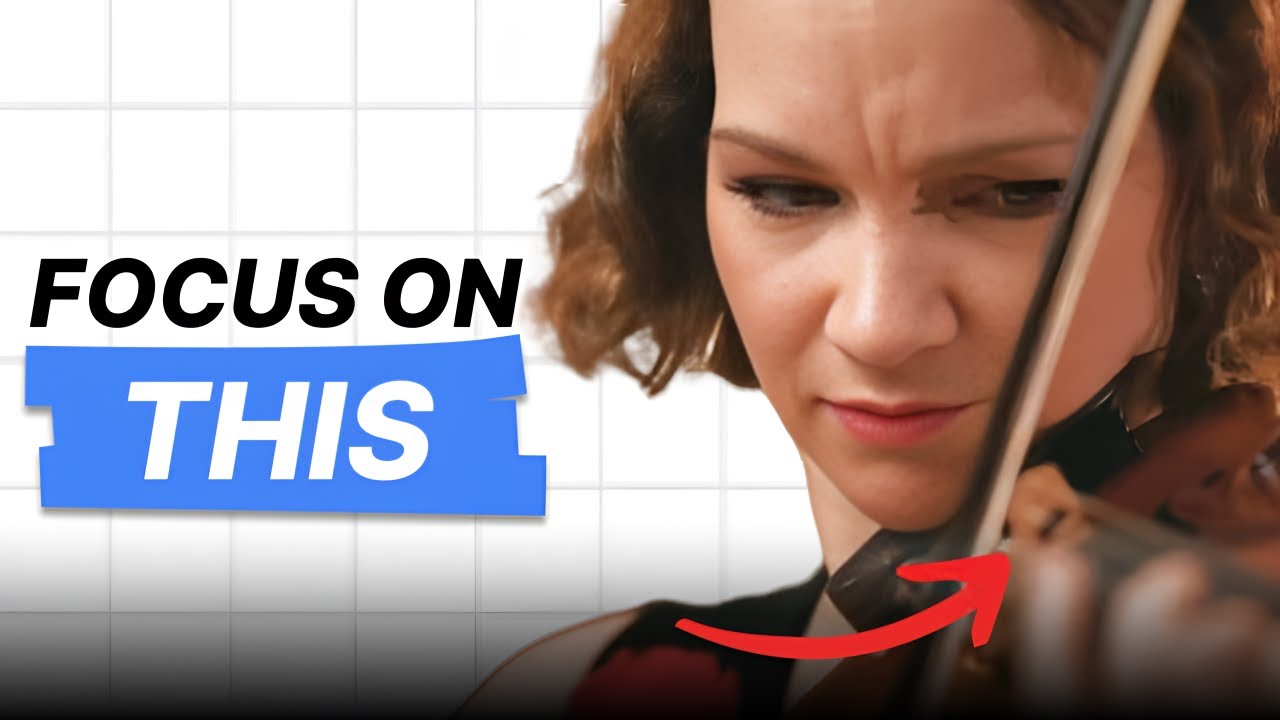
If your bow changes aren’t smooth, two fundamentals of right-hand technique are usually missing: keeping the bow travelling straight, and understanding what actually happens at the moment of the change — at the frog and at the tip. They’re more connected than they look, and together they’re what give you real control over your sound.
A bow change gives you away through the sound: the intensity has to stay even, or the listener hears the seam. Our first job as players is to enhance the music, never disrupt it — that’s what earns a standing ovation. Here’s how the right hand makes the change disappear.
Posture: The Four Elements
Everything starts with four parts of the arm working together. The shoulder stays relaxed — think of gently pulling it down; tension here brings pain and a forced, shallow tone. The elbow sits at the level of the string you’re on, never higher than the wrist and never hovering over the violin, or the sound turns artificial and you lose contact with the string.
The wrist, level with the elbow, is the hinge between the big arm and the small finger movements — it has to pass motion along as evenly as possible. And the fingers stay relaxed and responsive, acting as a cushion, especially at the hardest place of all: the frog.
Changing Direction in Four Moves
Keeping the bow straight through a change breaks down into four small movements. Starting at the frog, going down: first the arm opens out in front of you; then the elbow opens; then the wrist slightly pronates; and finally the fingers extend to hold the bow on its straight path. Going up, reverse it — fingers, wrist, elbow, arm.
The Change at Frog & Tip
The frog is the tricky end, because you’re managing the heaviest part of the bow. There are two ways to handle it. The first is the cushion: arrive with a relaxed wrist and fingers and let their natural circular motion make the turn — a slight, passive action that follows the non-stop motion rather than forcing it. The second is the whole-arm change: arrive at a fixed frame — fingers already retracted, wrist parallel to the elbow — and let the whole arm make the turn.
At the tip, keep the fingers passive and pronate the hand to match your dynamic so the sound doesn’t drop. The trick is to feel as if you’re still going up as you turn down — fooling your mind into a seamless change of direction.
Three Exercises
Do these in front of a mirror so you can catch every detail. One: the reset — lift the bow and make a big circle in the air to land in the correct frame at the frog (relaxed shoulder, elbow and wrist level with the string) until you can arrive there without thinking. Two: isolate each motion — open the arm to a 90° angle at the elbow, then open from the elbow, then the change at the tip, careful not to break the wrist (the fingers should already be extended to keep it straight). Three: rest your upper arm lightly against a wall to stop the elbow travelling too far — the most common cause of a crooked bow.
Bonus: Sing & Breathe
Don't skip this
Sing the phrase and breathe with it. Your musicality will never let you sing a line and chop it up for a bow change — so once you can hear the phrase the way you feel it, your bow follows. Exhale through the change at the frog and watch how much smoother it gets.
None of this fully clicks without a stable, flexible bow hold underneath it. If yours needs work, start with the Franco-Belgian bow hold.
Free AuditionReadiness Check
Play me your hardest passage · 30 min · 1-on-1 · live
You play the passage you're worried about.
It doesn't need to be polished.
I give you one specific fix.
We try it together, so you hear the difference.
You learn where you honestly stand.
And what to work on first.
For violinists who can already play through their audition program.
Book Free 30-min Call