Most players treat vibrato as a single trick — one shake of the hand they switch on and hope for the best. That belief is exactly what keeps their playing sounding like a student. Vibrato isn’t one technique. It’s a coordinated process, and it’s the single biggest contributor to the sound people recognise as yours. When one part of it is off, the whole thing collapses.
For this masterclass I went back to what the great pedagogues — Carl Flesch, Leopold Auer, Ivan Galamian — actually taught, and studied how today’s soloists shape their signature sound. It comes down to four elements. Master them and vibrato stops being a nervous wobble and starts being a voice.
The Three Types of Vibrato
Relying on one type of vibrato is like painting with a single brush. You can cover the canvas, but you can’t shade, blend, or create detail. Arm, hand, and finger vibrato each give you a different colour — and the point is to choose that colour on purpose.
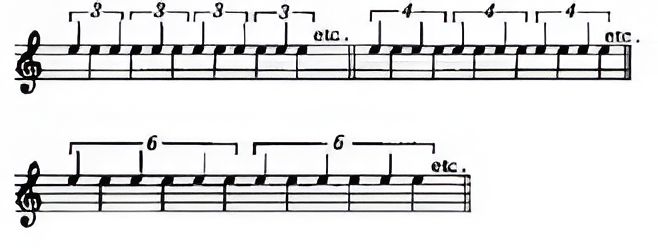
Arm vibrato starts in the forearm, the impulse travelling toward your face like a small shift. It’s your power source — the one you reach for in double stops, high positions, and anywhere the sound has to carry over an orchestra. To feel it in isolation, lock the wrist toward the scroll and swing the arm in an even rhythm: two, three, four, then six pulses per beat.
Hand vibrato swings from a still arm, the hand dropping back from the wrist while the fingertip keeps its place. This is the singing one — the lyrical, vocal quality that carries a long melodic line.
Finger vibrato is the smallest, driven from the base knuckle while the hand stays almost passive. It’s what creates the illusion of vibrato in fast passages where a wider motion simply isn’t possible.
Vibrato & Intonation
You’ve been told vibrato fixes intonation. It doesn’t. Vibrato can save your pitch or quietly destroy it — and the difference is whether you know what pitch your vibrato is actually creating.
The clearest model is to place the note perfectly in tune first, then roll the finger backward toward the flat side so the pitch always returns home to the note. The listener hears exactly where you mean to be.
None of that works without an ear that refuses to accept out-of-tune. Flesch called the practice behind it the attack of desperation: play scales and études slowly, without vibrato, checking every note against open strings until inaccuracy genuinely bothers you. It feels worse before it feels better — that discomfort is you finally hearing what you used to ignore.
Key insight
Picture the fingertip glued to the string by a single tiny dot — not the whole pad. That dot keeps the pitch anchored while the hand stays free to move.
Vibrato & Dynamics
Here’s where most sounds fall apart: the moment the music gets loud, the tone hardens; the moment it gets soft, it drains away. That happens when you treat volume and vibrato as separate jobs — bow for one, hand for the other.
They’re not separate. They’re two halves of a single expressive unit, split between your two arms. As the dynamic grows, vibrato grows with it — wider, faster, more intense. As it softens, vibrato narrows, slows, and holds back. If your vibrato is weak the bow compensates by pressing, and the sound gets crushed. A strong vibrato keeps the bow elastic.
Even your bow stroke shapes it. A martelé stroke is urgent, and the left hand matches that urgency automatically. A clean portato invites motion, and the vibrato opens up on its own.

Vibrato & Style
The last mistake is the most common: vibrato on every note, all the time. Used that way it isn’t expression — it’s a habit, and it flattens the music. Think of vibrato as a volume knob for emotion, not an on/off switch.
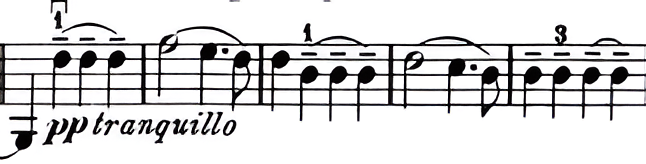
In Mozart, clarity is everything: a narrow vibrato and a clean tone keep the texture transparent. Brahms wants the opposite — a wide, deep vibrato to carry a dense, singing tone. Beethoven lives on contrast, and a passage marked to fade and dissolve is ruined by a standard melodic wobble. In Bach, vibrato isn’t a rule at all; it’s a decision about whether it clarifies the counterpoint or clouds it.
Same player, different composer, and the colour changes completely — while the voice underneath stays unmistakably yours. That’s the whole point. When you stop treating vibrato as constant, style finally has room to speak.
Free AuditionReadiness Check
Play me your hardest passage · 30 min · 1-on-1 · live
You play the passage you're worried about.
It doesn't need to be polished.
I give you one specific fix.
We try it together, so you hear the difference.
You learn where you honestly stand.
And what to work on first.
For violinists who can already play through their audition program.
Book Free 30-min Call