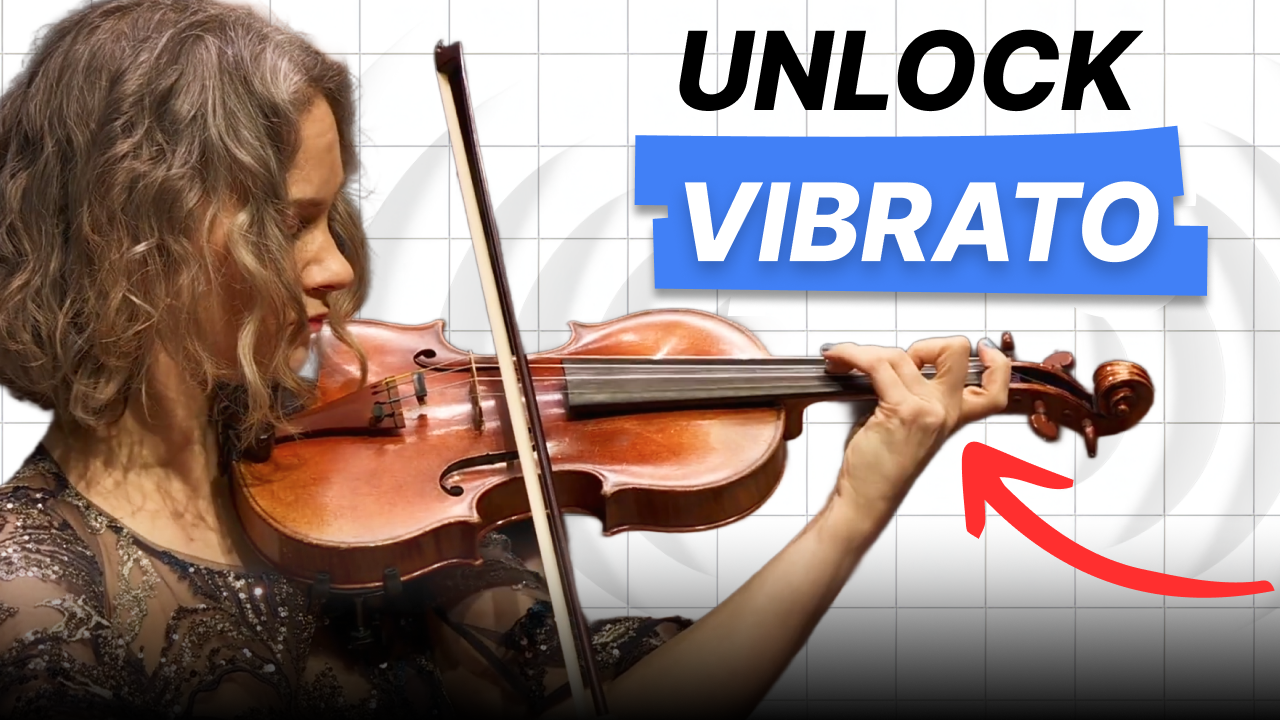
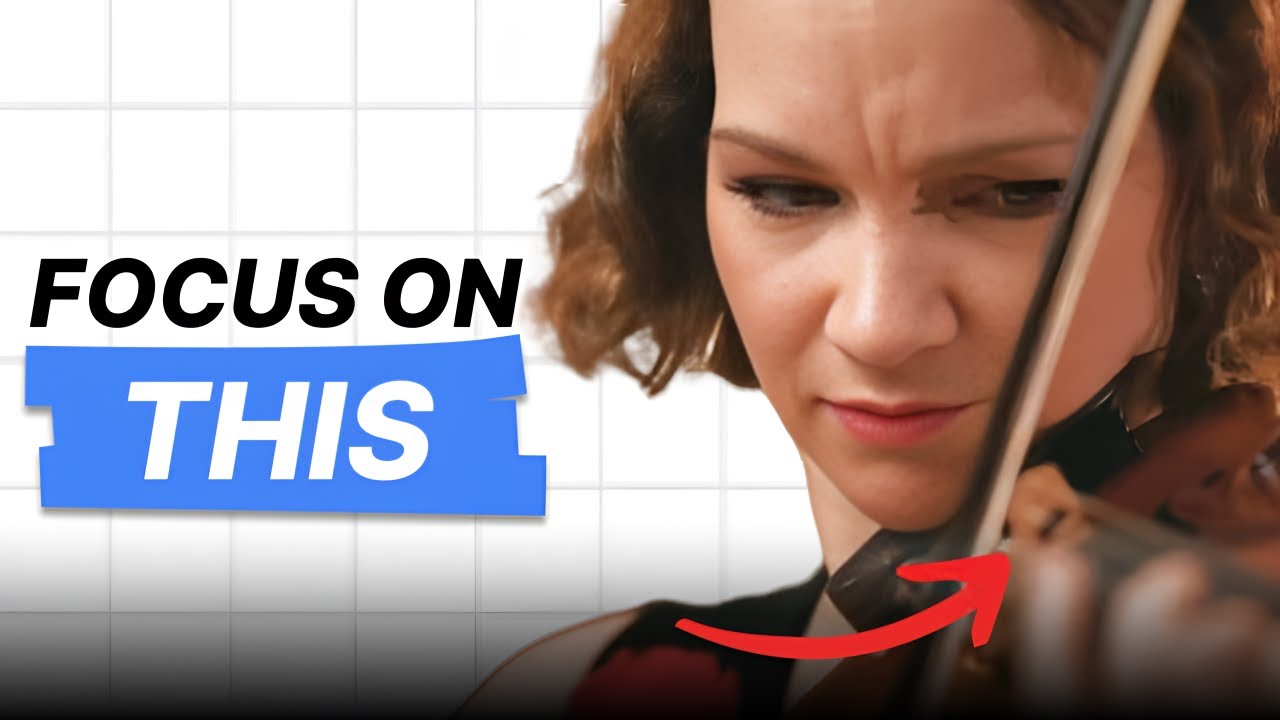
Sound is flexible, so your right hand has to be flexible too. Almost everything lives in the bow hand — tone, articulation, dynamics, the control of every stroke — and the bow hold is what makes the connection to the instrument feel effortless. That ease you see in great players on stage isn’t luck; a stable, flexible hold is the first key to it.
The Franco-Belgian School
There are several historical schools of bow hold — the Russian school of Leopold Auer (who taught Heifetz, Elman, and Milstein), the German hold of Spohr and Joachim, and the Franco-Belgian school of Viotti, de Bériot, and Ysaÿe. This last one, used by players like Perlman and Zukerman, is what we’ll build here. None is simply right or wrong — but if you want a hold that truly serves you, this is a dependable place to start.
Start With the Thumb
The thumb is the foundation: it’s the counter-pressure to the weight of the bow, so it needs its strongest point. Find it by standing the thumbnail edge on a table — in the middle it wobbles, but tilt it toward the index finger and it locks in. That same tilt makes the thumb naturally meet the middle and ring fingers, so the grip costs you no extra effort. Keep the joint slightly bent; that bend is the space you’ll later use to extend and retract.
Placing the Fingers
Learn the shape on a pencil first — a hexagonal one, because it mimics the bow — so you’re not fighting the bow’s weight yet. Open your hand, rest the pencil on the first joints of the middle and ring fingers, and set the thumb between them at its strong point, slightly bent, so the fingers form a circle. Relax, and the rest fall into place: the little finger curled on top, the index resting between its first and second joints.
The frame should look beautiful and relaxed — everything within reach. One way to check it: the walking down the street test. Let the hand hang naturally at your side as if you’re out for a walk, then place it on the pencil exactly as it was.
What Each Finger Does
Transfer it to the bow and you feel the weight — but you don’t need a tight grip. Once the bow is on the string, the string supports it; the fingers (with the wrist and arm) just regulate its natural weight. The thumb and little finger are the key pair: the thumb gives counter-pressure, the little finger lifts weight off and lets it back on, sharing that job with the index depending on where you are in the bow.
The middle and ring fingers are the stabilizers — they hold the frame together and add body to the sound, especially in rich forte passages, so you’re not forcing tone with a stiff arm or the index alone.
Flexibility in the Change
Those fingers are always working — actively or passively — to shape sound, cushion string crossings, and articulate. Feel it on the pencil: hold it in front of you, support the hand with the other, and gently extend and retract all the fingers together; turn the pencil upside down to watch the thumb. Going down-bow, the index and thumb lead and the others follow; going up, the little finger starts the push and hands off through the ring and middle to the index.
Key insight
Don’t overdo the motion. Retract only enough to feel fully in control; extend only to a natural-looking frame. Past that, you start gripping the bow by force — which wrecks your control and can eventually injure your hand.
Free AuditionReadiness Check
Play me your hardest passage · 30 min · 1-on-1 · live
You play the passage you're worried about.
It doesn't need to be polished.
I give you one specific fix.
We try it together, so you hear the difference.
You learn where you honestly stand.
And what to work on first.
For violinists who can already play through their audition program.
Book Free 30-min Call